News
Intel’s Long-Awaited Xeon 600 Processors for Workstations
February 20, 2026
6 min read

After 3 years after the Intel Xeon W-3500 and about 1.5 years after the release of the Intel Xeon 6 Server in 2024, Intel’s new Xeon 600 processors bring server‑class compute capabilities into single‑socket workstations with up to 86 cores.
By focusing on a single‑socket workstation platform, Xeon 600 simplifies deployment compared to dual‑socket servers while still supporting substantial parallel workloads. Exxact is looking forward to offering configurable Intel Xeon 600 for AI, scientific computing, and engineering simulation workloads.
We will go over the specifications of the Intel Xeon 600, set to be officially released later this year, with a late March 2026 launch.
Intel Xeon 600 utilizes the chiplet-based Granite Rapids architecture borrowed from their Xeon 6000 server processors. These new workstation processors will be supported on their new W890 motherboard and chipset beginning late March. Exxact is particularly excited to showcase the Intel Xeon 600 platform at NVIDIA GTC 2026; come visit and say hello!
Compared to the W-3500/2500 last-generation processors, the Intel Xeon 600 has
Intel Xeon 600 Series processors are workstation processors targeting professional workloads that benefit from many performance cores and wide memory and I/O subsystems.
| Model | Cores / Threads | Max Turbo Clock Speed | All Core Turbo Clock Speed | Base Clock Speed | PCIe Lanes | Cache | TDP |
| Intel Xeon 698X | 86 / 172 | 4.8 GHz | 3.0 GHz | 2.0 GHz | 128 | 336 MB | 350W |
| Intel Xeon 696X | 64 / 128 | 4.8 GHz | 3.5 GHz | 2.4 GHz | 128 | 336 MB | 350W |
| Intel Xeon 678X | 48 / 96 | 4.9 GHz | 3.8 GHz | 2.4 GHz | 128 | 192 MB | 300W |
| Intel Xeon 676X | 32 / 64 | 4.9 GHz | 4.3 GHz | 2.8 GHz | 128 | 144 MB | 275W |
| Intel Xeon 674X | 28 / 56 | 4.9 GHz | 4.3 GHz | 3.0 GHz | 128 | 144 MB | 270W |
| Intel Xeon 658X | 24 / 48 | 4.9 GHz | 4.3 GHz | 3.0 GHz | 128 | 144 MB | 250W |
| Intel Xeon 656 | 20 / 40 | 4.8 GHz | 4.5 GHz | 2.9 GHz | 128 | 72 MB | 210W |
| Intel Xeon 654 | 18 / 36 | 4.8 GHz | 4.5 GHz | 3.1 GHz | 128 | 72 MB | 200W |
| Intel Xeon 638 | 16 / 32 | 4.8 GHz | 4.5 GHz | 3.2 GHz | 80 | 72 MB | 180W |
| Intel Xeon 636 | 12 / 24 | 4.7 GHz | 4.5 GHz | 3.5 GHz | 80 | 48 MB | 170W |
| Intel Xeon 634 | 12 / 24 | 4.6 GHz | 3.9 GHz | 2.7 GHz | 80 | 48 MB | 150W |
As usual, high core count models have lower all-core turbo clock speeds, while lower core count models can clock higher. Understanding whether your workload prioritizes clock speed or core count will help you select the optimal processor. At Exxact, we can help configure the right system for your unique workload!
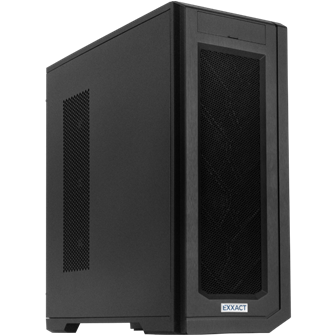
We extensively stock the latest CPUs and most powerful GPUs; accelerate your workloads with a workstation optimized to your deployment, budget, and desired performance.
Configure NowIn the SKU stack, Intel Xeon 600 has split the 18-cores and higher and the 16-cores and lower options that differ in memory channels and PCIe lanes.
Across the range, Xeon 600 supports DDR5 6400 MT/s RDIMM and 8000 MT/s MRDIMM, and plenty of PCIe 5.0 lanes.
The platform also provides substantial expansion headroom. Intel Xeon 600 processors for workstations feature 128 PCIe 5.0 lanes on the majority of SKUs, with 80 PCIe 5.0 lanes on lower core count models (16 cores and below).
In addition to supporting more GPUs, storage devices, and networking, these PCIe lanes can also be used for added memory via CXL 2.0.
Intel Xeon 600 workstations can be tailored to a range of compute‑heavy workloads. Across AI/ML, scientific research, and engineering simulation, the most important build variables tend to be CPU core count, memory capacity and bandwidth, and PCIe expansion for GPUs, storage, and networking.
Key considerations by workload:
The Intel Xeon 600 Processors for workstations will be another CPU option alongside the AMD Threadripper PRO for high-performance computing.
As a solutions integrator, our role is to translate platform capabilities into concrete system configurations. We look at core count, memory channels and capacity, GPU count, storage layout, and network requirements, then align those with the actual models, simulations, and datasets you plan to run.
A workstation can power the majority of the workloads for most individuals in AI research, scientific computing, and engineering simulation. Intel Xeon 600
Talk to our engineering team about your code, typical problem sizes, and preferred software stack, and our team at Exxact is more than happy to build your ideal Xeon 600 configuration that is sized appropriately and fits your budget.
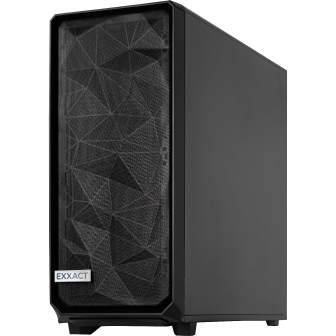
With access to the highest performing hardware, at Exxact, we can offer the platform optimized for your deployment, budget, and desired performance so you can make an impact with your research!
Talk to an Engineer TodayAfter 3 years after the Intel Xeon W-3500 and about 1.5 years after the release of the Intel Xeon 6 Server in 2024, Intel’s new Xeon 600 processors bring server‑class compute capabilities into single‑socket workstations with up to 86 cores.
By focusing on a single‑socket workstation platform, Xeon 600 simplifies deployment compared to dual‑socket servers while still supporting substantial parallel workloads. Exxact is looking forward to offering configurable Intel Xeon 600 for AI, scientific computing, and engineering simulation workloads.
We will go over the specifications of the Intel Xeon 600, set to be officially released later this year, with a late March 2026 launch.
Intel Xeon 600 utilizes the chiplet-based Granite Rapids architecture borrowed from their Xeon 6000 server processors. These new workstation processors will be supported on their new W890 motherboard and chipset beginning late March. Exxact is particularly excited to showcase the Intel Xeon 600 platform at NVIDIA GTC 2026; come visit and say hello!
Compared to the W-3500/2500 last-generation processors, the Intel Xeon 600 has
Intel Xeon 600 Series processors are workstation processors targeting professional workloads that benefit from many performance cores and wide memory and I/O subsystems.
| Model | Cores / Threads | Max Turbo Clock Speed | All Core Turbo Clock Speed | Base Clock Speed | PCIe Lanes | Cache | TDP |
| Intel Xeon 698X | 86 / 172 | 4.8 GHz | 3.0 GHz | 2.0 GHz | 128 | 336 MB | 350W |
| Intel Xeon 696X | 64 / 128 | 4.8 GHz | 3.5 GHz | 2.4 GHz | 128 | 336 MB | 350W |
| Intel Xeon 678X | 48 / 96 | 4.9 GHz | 3.8 GHz | 2.4 GHz | 128 | 192 MB | 300W |
| Intel Xeon 676X | 32 / 64 | 4.9 GHz | 4.3 GHz | 2.8 GHz | 128 | 144 MB | 275W |
| Intel Xeon 674X | 28 / 56 | 4.9 GHz | 4.3 GHz | 3.0 GHz | 128 | 144 MB | 270W |
| Intel Xeon 658X | 24 / 48 | 4.9 GHz | 4.3 GHz | 3.0 GHz | 128 | 144 MB | 250W |
| Intel Xeon 656 | 20 / 40 | 4.8 GHz | 4.5 GHz | 2.9 GHz | 128 | 72 MB | 210W |
| Intel Xeon 654 | 18 / 36 | 4.8 GHz | 4.5 GHz | 3.1 GHz | 128 | 72 MB | 200W |
| Intel Xeon 638 | 16 / 32 | 4.8 GHz | 4.5 GHz | 3.2 GHz | 80 | 72 MB | 180W |
| Intel Xeon 636 | 12 / 24 | 4.7 GHz | 4.5 GHz | 3.5 GHz | 80 | 48 MB | 170W |
| Intel Xeon 634 | 12 / 24 | 4.6 GHz | 3.9 GHz | 2.7 GHz | 80 | 48 MB | 150W |
As usual, high core count models have lower all-core turbo clock speeds, while lower core count models can clock higher. Understanding whether your workload prioritizes clock speed or core count will help you select the optimal processor. At Exxact, we can help configure the right system for your unique workload!
We extensively stock the latest CPUs and most powerful GPUs; accelerate your workloads with a workstation optimized to your deployment, budget, and desired performance.
Configure NowIn the SKU stack, Intel Xeon 600 has split the 18-cores and higher and the 16-cores and lower options that differ in memory channels and PCIe lanes.
Across the range, Xeon 600 supports DDR5 6400 MT/s RDIMM and 8000 MT/s MRDIMM, and plenty of PCIe 5.0 lanes.
The platform also provides substantial expansion headroom. Intel Xeon 600 processors for workstations feature 128 PCIe 5.0 lanes on the majority of SKUs, with 80 PCIe 5.0 lanes on lower core count models (16 cores and below).
In addition to supporting more GPUs, storage devices, and networking, these PCIe lanes can also be used for added memory via CXL 2.0.
Intel Xeon 600 workstations can be tailored to a range of compute‑heavy workloads. Across AI/ML, scientific research, and engineering simulation, the most important build variables tend to be CPU core count, memory capacity and bandwidth, and PCIe expansion for GPUs, storage, and networking.
Key considerations by workload:
The Intel Xeon 600 Processors for workstations will be another CPU option alongside the AMD Threadripper PRO for high-performance computing.
As a solutions integrator, our role is to translate platform capabilities into concrete system configurations. We look at core count, memory channels and capacity, GPU count, storage layout, and network requirements, then align those with the actual models, simulations, and datasets you plan to run.
A workstation can power the majority of the workloads for most individuals in AI research, scientific computing, and engineering simulation. Intel Xeon 600
Talk to our engineering team about your code, typical problem sizes, and preferred software stack, and our team at Exxact is more than happy to build your ideal Xeon 600 configuration that is sized appropriately and fits your budget.
With access to the highest performing hardware, at Exxact, we can offer the platform optimized for your deployment, budget, and desired performance so you can make an impact with your research!
Talk to an Engineer Today