Scientific Computing
AMBER 26 NVIDIA GPU Benchmarks
June 10, 2026
6 min read

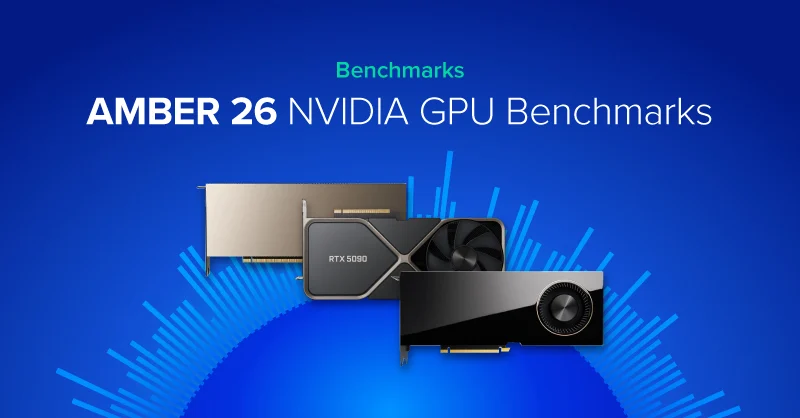
At Exxact, we have benchmarked AMBER for quite some years now to provide GPU performance for the molecular dynamics simulation suite and to educate both our team and customers on choosing optimal hardware. We want to help customers choose the right NVIDIA GPU for their molecular dynamics workloads, from smaller models to million-atom-class systems.
Before getting into the graphs, here are the key test conditions:
The suite covers a range of problem sizes (largest to smallest):
Note: We show NPT results. NVE runs are typically ~2–8% faster across GPUs. For all graphs NVE and NPT, see our AMBER supported software page, or talk to an Exxact engineer today.
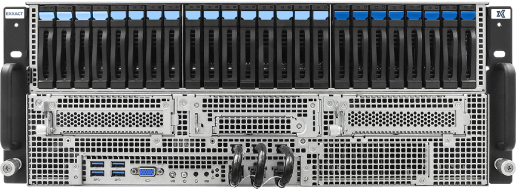
With access to the highest-performing hardware, Exxact offers customizable platforms for AMBER, GROMACS, NAMD, and more. Every Exxact system is optimized for your deployment, budget, and desired performance so you can make an impact with your research!
Configure your Ideal GPU System for Life Science ResearchThe following Amber 24 Benchmarks were performed on an Exxact AMBER Certified MD System using the AMBER 24 Benchmark Suite with the following GPUs:
| GeForce RTX | RTX & RTX PRO | Data Center |
| • NVIDIA GeForce RTX 5090 (32GB) • NVIDIA GeForce RTX 5080 (16GB) • NVIDIA GeForce RTX 5070 Ti (12GB) | • RTX PRO 6000 Blackwell Max-Q (96GB) • RTX PRO 5000 Blackwell (48GB) • RTX PRO 4500 Blackwell (32GB) • RTX PRO 4000 Blackwell (24GB) • RTX 6000 Ada (48GB) • RTX 5000 Ada (32GB) • RTX 4500 Ada (24GB) | • NVIDIA B200 SXM (180GB) • NVIDIA Grace Hopper GH200 (144GB) • NVIDIA H100 (80GB PCIe) |

AMBER is a suite of molecular simulation tools, with PMEMD as the primary performance driver. PMEMD is available in CPU (single + MPI) and GPU (CUDA) builds. AMBER does not speed up one simulation by adding more GPUs; multi-GPU systems are best used to run multiple independent simulations in parallel.
Because most AMBER workloads run efficiently on a single GPU, overall throughput is typically dominated by GPU performance. CPU, memory, and storage generally have a smaller impact than the GPU (assuming a balanced workstation/server configuration).
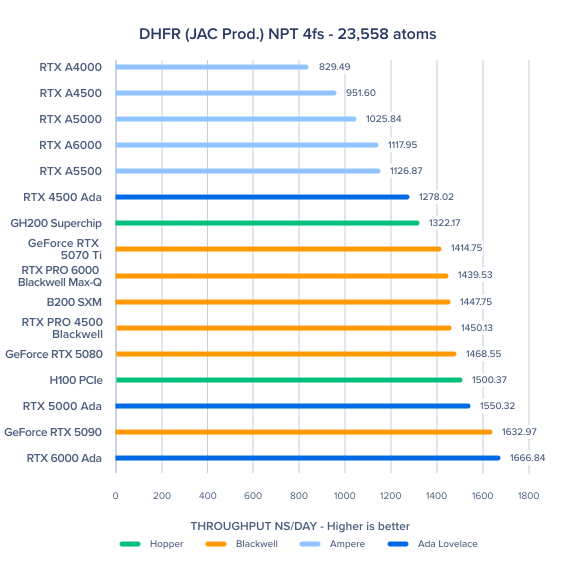
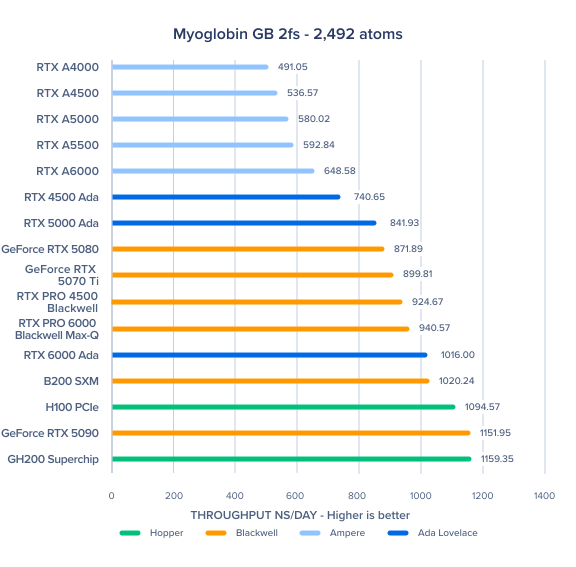
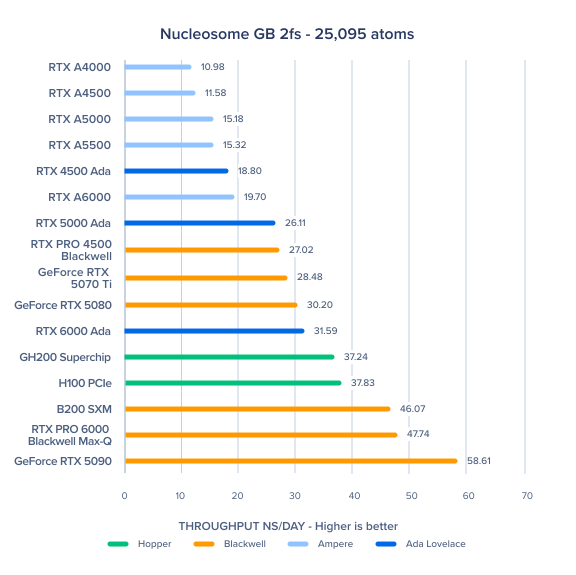
Exxact recommends, for AMBER, the NVIDIA GeForce RTX 5090, NVIDIA RTX PRO 6000 Max-Q, and NVIDIA RTX PRO 4500.
Exxact recommends NVIDIA GeForce RTX 5090 for the highest throughput for individual research running simulations sequentially. For peak single GPU throughput, the NVIDIA RTX 5090 in a workstation is the best performer at a lower price. If you don't need to run multiple simulations simultaneously, the RTX 5090 delivers the fastest results. The only disadvantages are the lack of scalability and the inability to support multi-GPU deployments.
NVIDIA RTX PRO 6000 Blackwell Max-Q is perfect for larger simulation models with the opportunity to scale. The NVIDIA RTX PRO 6000 Blackwell will showcases performance within 5% of the NVIDIA GeForce RTX 5090 for those looking at 2U and 4U server-only deployments with up to 8 and/or 10 GPU options.
NVIDIA RTX PRO 4500 is ideal when running smaller simulations running in parallel at a lower cost. It comes in a dual-slot active GPU for workstations, and a single-slot passive GPU for extreme density in 2U and 4U servers. RTX 4500 offers excellent price-to-performance and scalability. In simulations with low atom count, the NVIDIA RTX PRO 4500 Blackwell matches the NVIDIA RTX PRO 6000 Blackwell Max-Q performance at a fraction of the cost.
Not all use cases are the same, and AMBER is likely just one of several applications in your research toolkit. AMBER is often one part of a broader research workflow, so the “best” system depends on the full application mix and budget. At Exxact Corp., we're committed to providing resources that help you configure the optimal custom system for your specific needs.
Since AMBER performance is typically GPU-driven, you may want to prioritize CPU, memory, and storage based on the other simulation packages you run (for example, GROMACS or NAMD can be more CPU-sensitive depending on the workload).
If you want help selecting a balanced configuration for multi-application Life Science workloads, Exxact can recommend options based on your target performance and budget.
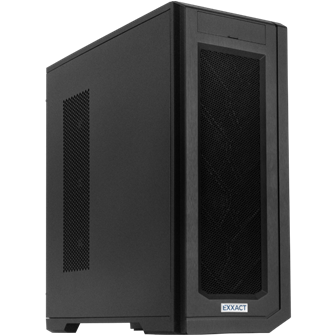
With access to the highest performing hardware, at Exxact, we can offer the platform optimized for your deployment, budget, and desired performance so you can make an impact with your research!
Configure a Life Sciences or Materials Science Solution TodayAt Exxact, we have benchmarked AMBER for quite some years now to provide GPU performance for the molecular dynamics simulation suite and to educate both our team and customers on choosing optimal hardware. We want to help customers choose the right NVIDIA GPU for their molecular dynamics workloads, from smaller models to million-atom-class systems.
Before getting into the graphs, here are the key test conditions:
The suite covers a range of problem sizes (largest to smallest):
Note: We show NPT results. NVE runs are typically ~2–8% faster across GPUs. For all graphs NVE and NPT, see our AMBER supported software page, or talk to an Exxact engineer today.
With access to the highest-performing hardware, Exxact offers customizable platforms for AMBER, GROMACS, NAMD, and more. Every Exxact system is optimized for your deployment, budget, and desired performance so you can make an impact with your research!
Configure your Ideal GPU System for Life Science ResearchThe following Amber 24 Benchmarks were performed on an Exxact AMBER Certified MD System using the AMBER 24 Benchmark Suite with the following GPUs:
| GeForce RTX | RTX & RTX PRO | Data Center |
| • NVIDIA GeForce RTX 5090 (32GB) • NVIDIA GeForce RTX 5080 (16GB) • NVIDIA GeForce RTX 5070 Ti (12GB) | • RTX PRO 6000 Blackwell Max-Q (96GB) • RTX PRO 5000 Blackwell (48GB) • RTX PRO 4500 Blackwell (32GB) • RTX PRO 4000 Blackwell (24GB) • RTX 6000 Ada (48GB) • RTX 5000 Ada (32GB) • RTX 4500 Ada (24GB) | • NVIDIA B200 SXM (180GB) • NVIDIA Grace Hopper GH200 (144GB) • NVIDIA H100 (80GB PCIe) |
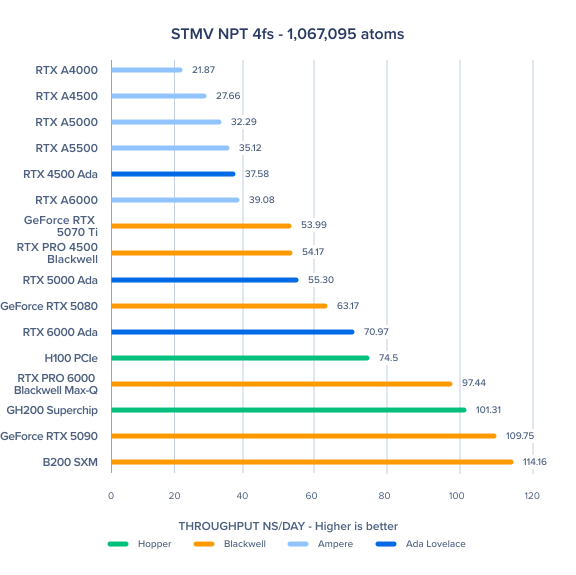
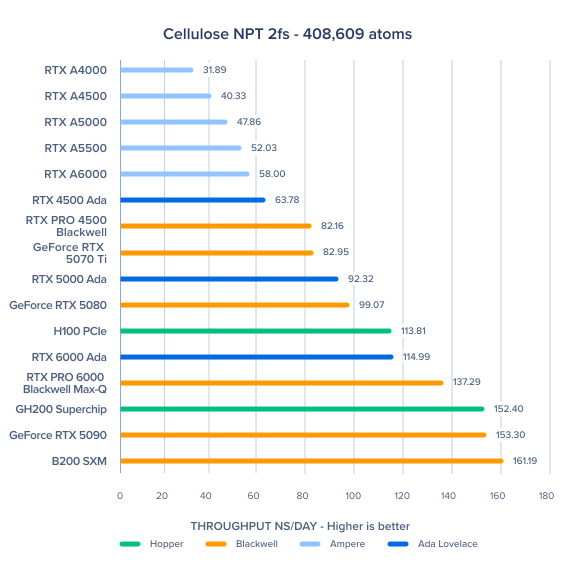
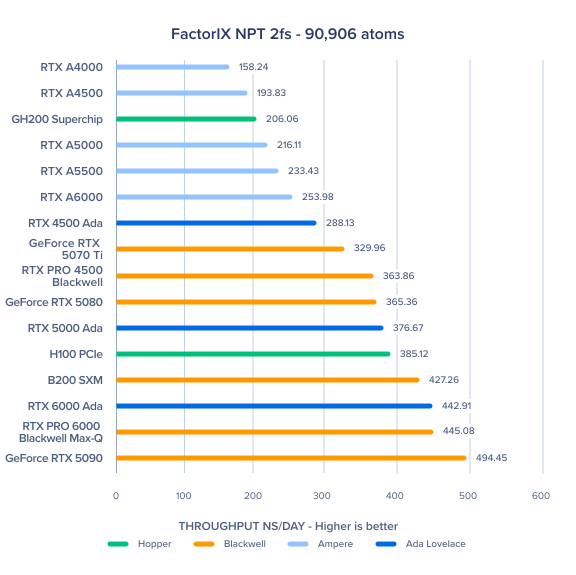
AMBER is a suite of molecular simulation tools, with PMEMD as the primary performance driver. PMEMD is available in CPU (single + MPI) and GPU (CUDA) builds. AMBER does not speed up one simulation by adding more GPUs; multi-GPU systems are best used to run multiple independent simulations in parallel.
Because most AMBER workloads run efficiently on a single GPU, overall throughput is typically dominated by GPU performance. CPU, memory, and storage generally have a smaller impact than the GPU (assuming a balanced workstation/server configuration).
Exxact recommends, for AMBER, the NVIDIA GeForce RTX 5090, NVIDIA RTX PRO 6000 Max-Q, and NVIDIA RTX PRO 4500.
Exxact recommends NVIDIA GeForce RTX 5090 for the highest throughput for individual research running simulations sequentially. For peak single GPU throughput, the NVIDIA RTX 5090 in a workstation is the best performer at a lower price. If you don't need to run multiple simulations simultaneously, the RTX 5090 delivers the fastest results. The only disadvantages are the lack of scalability and the inability to support multi-GPU deployments.
NVIDIA RTX PRO 6000 Blackwell Max-Q is perfect for larger simulation models with the opportunity to scale. The NVIDIA RTX PRO 6000 Blackwell will showcases performance within 5% of the NVIDIA GeForce RTX 5090 for those looking at 2U and 4U server-only deployments with up to 8 and/or 10 GPU options.
NVIDIA RTX PRO 4500 is ideal when running smaller simulations running in parallel at a lower cost. It comes in a dual-slot active GPU for workstations, and a single-slot passive GPU for extreme density in 2U and 4U servers. RTX 4500 offers excellent price-to-performance and scalability. In simulations with low atom count, the NVIDIA RTX PRO 4500 Blackwell matches the NVIDIA RTX PRO 6000 Blackwell Max-Q performance at a fraction of the cost.
Not all use cases are the same, and AMBER is likely just one of several applications in your research toolkit. AMBER is often one part of a broader research workflow, so the “best” system depends on the full application mix and budget. At Exxact Corp., we're committed to providing resources that help you configure the optimal custom system for your specific needs.
Since AMBER performance is typically GPU-driven, you may want to prioritize CPU, memory, and storage based on the other simulation packages you run (for example, GROMACS or NAMD can be more CPU-sensitive depending on the workload).
If you want help selecting a balanced configuration for multi-application Life Science workloads, Exxact can recommend options based on your target performance and budget.
With access to the highest performing hardware, at Exxact, we can offer the platform optimized for your deployment, budget, and desired performance so you can make an impact with your research!
Configure a Life Sciences or Materials Science Solution Today