Scientific Computing
CryoSparc v5.0.0 Major Update - Dynamic Auto Mask, Multi-Job per GPU, UI Updates, & More
January 30, 2026
8 min read

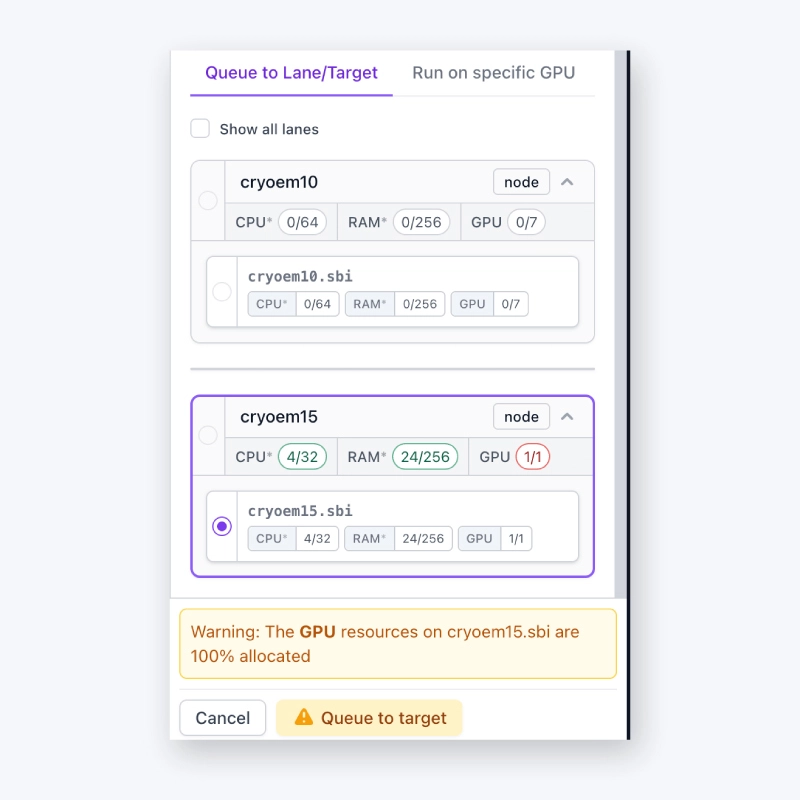
CryoSPARC v5 beta has now been released to the public, introducing a mix of architectural changes, workflow improvements, and refinement updates. This update has a big emphasis on performance-oriented solving on the GPU side with better utilization, auto-start/auto-stop to release GPU resources, and multi-job single-GPU options.
Other updates are visible in the UI to make cryo-EM workflows more seamless and intuitive. Coupled with important stability and scalability changes, CryoSPARC v5 is a big step forward for GPU-accelerated cryo-EM research.
This article highlights the big changes in CryoSPARC v5. You can view the entire release notes and installation instructions on CryoSPARC.
With access to the highest-performing hardware and industry experts, Exxact offers platforms optimized for your cryo-EM deployment, budget, and desired performance so you can make an impact with your research!
Configure your CryoSPARC System TodayThese changes reduce the time spent navigating between panels and make it easier to assess job performance at a high level. These changes are useful when evaluating refinement strategies, particle subsets, or classification settings.
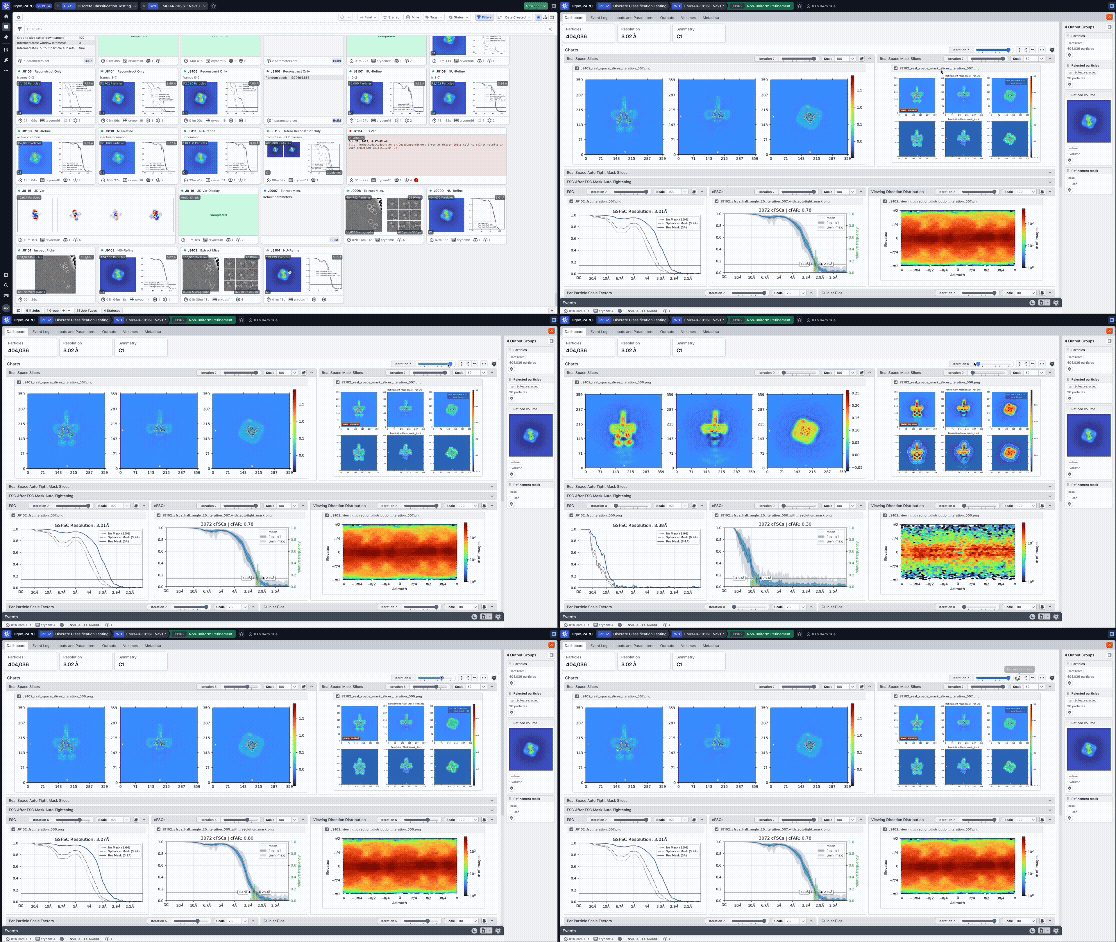
These refinement improvements significantly reduce the amount of manual parameter tuning required to achieve high-quality reconstructions, saving researchers considerable time during iterative refinement cycles.
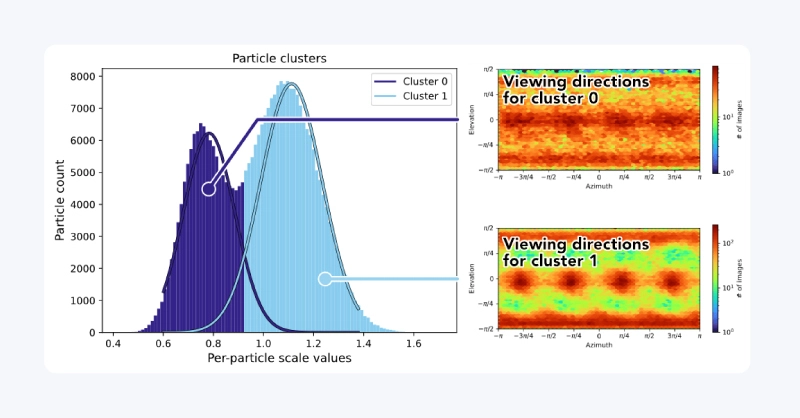
The automatic mask generation and per-particle scale optimization help prevent overfitting while making it easier to identify and filter out low-quality particles that would otherwise compromise final map quality. For facilities processing large volumes of data and users new to cryo-EM, these changes lower the barrier to obtaining reliable, publication-quality structures.
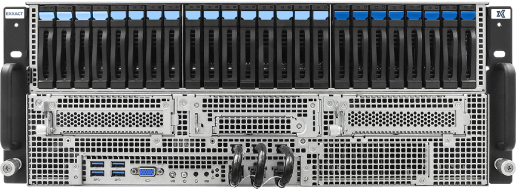
With access to the highest-performing hardware, Exxact offers customizable platforms for AMBER, GROMACS, NAMD, and more. Every Exxact system is optimized for your deployment, budget, and desired performance so you can make an impact with your research!
Configure your Ideal GPU System for Life Science ResearchCryoSPARC Live gains several improvements aimed at higher-throughput and facility environments. Live sessions now support more flexible auto-start and auto-pause features, cloning/copy-paste functionality, job/parameter search capabilities, and overall better UI updates for the organization.
These interface changes improve navigation, organization, and speed. For teams managing large-scale or long-running projects, these organizational tools reduce cognitive overhead and make it easier to maintain clean, navigable workspaces. The ability to clone sessions and copy parameters also accelerates workflow standardization across multiple datasets or users.
CryoSPARC v5 introduces a new command-line interface that is not compatible with existing v4 CLI scripts. Labs with automated pipelines will need to update their scripts accordingly.
The updated cryosparc-tools Python API remains backward compatible, which helps ease the transition for users who rely on scripted workflows. Hardware and driver requirements have also been updated, reflecting a shift toward newer CUDA versions and GPU architectures.
CryoSPARC v5 also adds an Instance Recovery tool that fully recovers a database loss or corruption as a stopgap. Still, it is important to back up your data, but just in case, CryoSPARC has your back.
CryoSPARC v5 delivers meaningful changes across system stability, job evaluation, refinement robustness, and real-time processing. The release prioritizes reliability and scalability while reducing manual intervention across common workflows.
For users managing high-throughput facilities or working with challenging targets, the improvements to GPU resource management, automatic masking, and Live session controls directly address common bottlenecks in data processing pipelines. The UI refinements and organizational tools make it easier to track progress across multiple datasets and collaborate effectively within research teams.
Labs already using CryoSPARC should review the migration guide and test the beta in a non-production environment before full deployment. For new users, v5 represents a more accessible and robust entry point into GPU-accelerated cryo-EM structure determination with better functionality and improved user experience.
Build a dedicated GPU system with Exxact for your cryo-EM deployment for CryoSPARC or RELION. We’ve worked with numerous research institutions to provide them with complete HPC solutions for accelerating their biomolecular innovations. Contact us today for more information.
With access to the highest-performing hardware and industry experts, Exxact offers platforms optimized for your Life Science reseach deployment, budget, and desired performance so you can continue your groundbreaking innovations.
Configure your Protein Folding System TodayCryoSPARC v5 beta has now been released to the public, introducing a mix of architectural changes, workflow improvements, and refinement updates. This update has a big emphasis on performance-oriented solving on the GPU side with better utilization, auto-start/auto-stop to release GPU resources, and multi-job single-GPU options.
Other updates are visible in the UI to make cryo-EM workflows more seamless and intuitive. Coupled with important stability and scalability changes, CryoSPARC v5 is a big step forward for GPU-accelerated cryo-EM research.
This article highlights the big changes in CryoSPARC v5. You can view the entire release notes and installation instructions on CryoSPARC.
With access to the highest-performing hardware and industry experts, Exxact offers platforms optimized for your cryo-EM deployment, budget, and desired performance so you can make an impact with your research!
Configure your CryoSPARC System TodayThese changes reduce the time spent navigating between panels and make it easier to assess job performance at a high level. These changes are useful when evaluating refinement strategies, particle subsets, or classification settings.
These refinement improvements significantly reduce the amount of manual parameter tuning required to achieve high-quality reconstructions, saving researchers considerable time during iterative refinement cycles.
The automatic mask generation and per-particle scale optimization help prevent overfitting while making it easier to identify and filter out low-quality particles that would otherwise compromise final map quality. For facilities processing large volumes of data and users new to cryo-EM, these changes lower the barrier to obtaining reliable, publication-quality structures.
With access to the highest-performing hardware, Exxact offers customizable platforms for AMBER, GROMACS, NAMD, and more. Every Exxact system is optimized for your deployment, budget, and desired performance so you can make an impact with your research!
Configure your Ideal GPU System for Life Science ResearchCryoSPARC Live gains several improvements aimed at higher-throughput and facility environments. Live sessions now support more flexible auto-start and auto-pause features, cloning/copy-paste functionality, job/parameter search capabilities, and overall better UI updates for the organization.
These interface changes improve navigation, organization, and speed. For teams managing large-scale or long-running projects, these organizational tools reduce cognitive overhead and make it easier to maintain clean, navigable workspaces. The ability to clone sessions and copy parameters also accelerates workflow standardization across multiple datasets or users.
CryoSPARC v5 introduces a new command-line interface that is not compatible with existing v4 CLI scripts. Labs with automated pipelines will need to update their scripts accordingly.
The updated cryosparc-tools Python API remains backward compatible, which helps ease the transition for users who rely on scripted workflows. Hardware and driver requirements have also been updated, reflecting a shift toward newer CUDA versions and GPU architectures.
CryoSPARC v5 also adds an Instance Recovery tool that fully recovers a database loss or corruption as a stopgap. Still, it is important to back up your data, but just in case, CryoSPARC has your back.
CryoSPARC v5 delivers meaningful changes across system stability, job evaluation, refinement robustness, and real-time processing. The release prioritizes reliability and scalability while reducing manual intervention across common workflows.
For users managing high-throughput facilities or working with challenging targets, the improvements to GPU resource management, automatic masking, and Live session controls directly address common bottlenecks in data processing pipelines. The UI refinements and organizational tools make it easier to track progress across multiple datasets and collaborate effectively within research teams.
Labs already using CryoSPARC should review the migration guide and test the beta in a non-production environment before full deployment. For new users, v5 represents a more accessible and robust entry point into GPU-accelerated cryo-EM structure determination with better functionality and improved user experience.
Build a dedicated GPU system with Exxact for your cryo-EM deployment for CryoSPARC or RELION. We’ve worked with numerous research institutions to provide them with complete HPC solutions for accelerating their biomolecular innovations. Contact us today for more information.
With access to the highest-performing hardware and industry experts, Exxact offers platforms optimized for your Life Science reseach deployment, budget, and desired performance so you can continue your groundbreaking innovations.
Configure your Protein Folding System Today