HPC
InfiniBand vs Ethernet in the Data Center
December 16, 2025
8 min read

High-speed networking has become a foundational element of modern high-performance computing (HPC) and large-scale artificial intelligence (AI) infrastructures. As compute density increases and clusters scale to thousands of GPUs, the interconnect fabric often becomes the determining factor for overall system performance. Low latency, high bandwidth, and predictable communication behavior is just as important as the compute hardware itself.
Ethernet and InfiniBand remain the two primary technologies used to build high-performance interconnects. Each has evolved significantly, such as 800G/1.6T Ethernet, and next-generation InfiniBand HDR/NDR/XDR fabrics.
We will explain each technology, highlight its latest capabilities, and evaluate which networking architecture is the best fit for your computing infrastructure.
Ethernet is a widely used networking protocol for connecting devices in local area networks (LANs) and data centers, valued for its scalability, mature ecosystem, and consistent upgrade roadmap. Originally built for LANs, it has evolved into a high-performance fabric supporting 100GbE, 200GbE, 400GbE, and 800GbE links, with 1.6T Ethernet now entering early deployment.
Ethernet’s versatility makes it suitable for virtualized environments, large distributed systems, and AI clusters that prioritize scale and interoperability. Technologies such as RoCEv2, advanced congestion control, and DPU/SmartNIC acceleration extend Ethernet’s ability to deliver low-latency, RDMA-capable performance across large multi-rack deployments.
Ethernet is the preferred choice for general-purpose, cloud, and large-scale distributed workloads where cost efficiency, broad interoperability, and operational simplicity matter most. Its mature ecosystem and compatibility with standard TCP/IP environments make it easy to integrate across diverse data centers, including hybrid and multi-cloud deployments. Modern enhancements—such as RoCEv2, advanced congestion control, and DPU/SmartNIC acceleration—further strengthen Ethernet’s suitability for high-throughput applications.
Use Ethernet when:
InfiniBand is a high-speed, low-latency interconnect designed for HPC and large-scale AI training. Its native RDMA architecture enables direct memory communication across nodes with minimal CPU involvement, reducing latency and improving throughput for tightly coupled workloads.
InfiniBand has progressed through several bandwidth generations—FDR (56 Gb/s), EDR (100 Gb/s), HDR (200 Gb/s), and today’s NDR (400 Gb/s), as well as emerging XDR class—providing predictable performance at scale. The ecosystem around InfiniBand, including GPUDirect RDMA, SHARP in-network acceleration, OpenMPI, and HPC schedulers, further optimizes collective operations and multi-node GPU performance.
InfiniBand is the preferred interconnect for environments that require ultra-low latency, high sustained bandwidth, and efficient inter-node communication. Its native RDMA implementation, advanced congestion control, and predictable performance under load make it purpose-built for tightly coupled HPC workloads and large multi-node AI training.
Use InfiniBand when:
In modern HPC and AI data centers, Ethernet and InfiniBand often coexist to balance cost, performance, and operational flexibility. These hybrid fabrics assign each technology to the roles that best leverage its strengths.
A common approach separates control and compute traffic:
Some deployments equip servers with two NICs—one for Ethernet and one for InfiniBand:
This design is particularly effective for:
Yes—for many workloads. Modern Ethernet (400G–800G) with RoCE and DPUs performs well for distributed AI and large-scale data processing, but ultra-low-latency workloads may still benefit from InfiniBand.
InfiniBand is best for tightly coupled HPC and large AI training jobs that require predictable, ultra-low latency, and high sustained bandwidth across many nodes.
Yes. Many organizations deploy mixed fabrics, using Ethernet for management, storage, and cloud connectivity, and InfiniBand for compute-intensive inter-node traffic.
Network latency and bandwidth directly affect GPU utilization and job completion time. High-performance fabrics like InfiniBand reduce communication overhead during gradient exchange and collective operations, improving overall training efficiency at scale.
In many cases, a hybrid approach delivers the best balance. Ethernet is often the best fit for distributed, cloud-integrated, or cost-sensitive environments, while InfiniBand is better suited for tightly coupled HPC and large AI training clusters that demand predictable, ultra-low-latency performance.
Ethernet and InfiniBand each serve distinct roles in modern data centers. Selecting the right fabric depends on your workload type, scale, and budget, and many organizations adopt a hybrid approach to leverage the strengths of both technologies.
| Feature | Ethernet | InfiniBand |
| Latency | Higher | Lower |
| Bandwidth | 100 GbE – 800 GbE (1.6 TbE emerging) | HDR/NDR: 200–800 Gb/s per link; XDR (800-1.6Tbps) emerging |
| CPU Overhead | Moderate to high | Very low (native RDMA) |
| RDMA Support | Yes (RoCEv2, UEC standards) | Native |
| Scalability | High (large cloud/hybrid deployments) | Very high (HPC clusters, AI) |
| Cost | Lower | Higher |
| Ecosystem | Cloud, enterprise, edge | HPC, AI, GPU clusters |
Mixed fabrics provide flexibility but also introduce complexity in routing, monitoring, and tuning. Proper planning is essential to maximize performance and value.
Exxact can help with fabric design and optimization tailored to your specific workloads. We offer full-rack integration, professional network mapping, and multi-node cluster deployment, ensuring your infrastructure is built for optimal performance. Contact us today to get started.
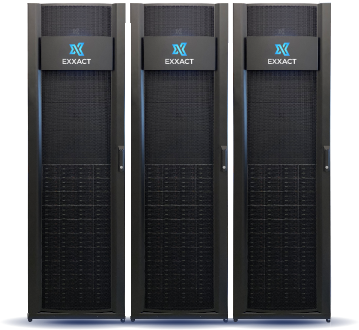
Deploying full-scale AI models can be accelerated exponentially with the right computing infrastructure. Storage, head node, networking, compute - all components of your next Exxact cluster are configurable to your workload to drive and accelerate research and innovation.
Get a Quote TodayHigh-speed networking has become a foundational element of modern high-performance computing (HPC) and large-scale artificial intelligence (AI) infrastructures. As compute density increases and clusters scale to thousands of GPUs, the interconnect fabric often becomes the determining factor for overall system performance. Low latency, high bandwidth, and predictable communication behavior is just as important as the compute hardware itself.
Ethernet and InfiniBand remain the two primary technologies used to build high-performance interconnects. Each has evolved significantly, such as 800G/1.6T Ethernet, and next-generation InfiniBand HDR/NDR/XDR fabrics.
We will explain each technology, highlight its latest capabilities, and evaluate which networking architecture is the best fit for your computing infrastructure.
Ethernet is a widely used networking protocol for connecting devices in local area networks (LANs) and data centers, valued for its scalability, mature ecosystem, and consistent upgrade roadmap. Originally built for LANs, it has evolved into a high-performance fabric supporting 100GbE, 200GbE, 400GbE, and 800GbE links, with 1.6T Ethernet now entering early deployment.
Ethernet’s versatility makes it suitable for virtualized environments, large distributed systems, and AI clusters that prioritize scale and interoperability. Technologies such as RoCEv2, advanced congestion control, and DPU/SmartNIC acceleration extend Ethernet’s ability to deliver low-latency, RDMA-capable performance across large multi-rack deployments.
Ethernet is the preferred choice for general-purpose, cloud, and large-scale distributed workloads where cost efficiency, broad interoperability, and operational simplicity matter most. Its mature ecosystem and compatibility with standard TCP/IP environments make it easy to integrate across diverse data centers, including hybrid and multi-cloud deployments. Modern enhancements—such as RoCEv2, advanced congestion control, and DPU/SmartNIC acceleration—further strengthen Ethernet’s suitability for high-throughput applications.
Use Ethernet when:
InfiniBand is a high-speed, low-latency interconnect designed for HPC and large-scale AI training. Its native RDMA architecture enables direct memory communication across nodes with minimal CPU involvement, reducing latency and improving throughput for tightly coupled workloads.
InfiniBand has progressed through several bandwidth generations—FDR (56 Gb/s), EDR (100 Gb/s), HDR (200 Gb/s), and today’s NDR (400 Gb/s), as well as emerging XDR class—providing predictable performance at scale. The ecosystem around InfiniBand, including GPUDirect RDMA, SHARP in-network acceleration, OpenMPI, and HPC schedulers, further optimizes collective operations and multi-node GPU performance.
InfiniBand is the preferred interconnect for environments that require ultra-low latency, high sustained bandwidth, and efficient inter-node communication. Its native RDMA implementation, advanced congestion control, and predictable performance under load make it purpose-built for tightly coupled HPC workloads and large multi-node AI training.
Use InfiniBand when:
In modern HPC and AI data centers, Ethernet and InfiniBand often coexist to balance cost, performance, and operational flexibility. These hybrid fabrics assign each technology to the roles that best leverage its strengths.
A common approach separates control and compute traffic:
Some deployments equip servers with two NICs—one for Ethernet and one for InfiniBand:
This design is particularly effective for:
Yes—for many workloads. Modern Ethernet (400G–800G) with RoCE and DPUs performs well for distributed AI and large-scale data processing, but ultra-low-latency workloads may still benefit from InfiniBand.
InfiniBand is best for tightly coupled HPC and large AI training jobs that require predictable, ultra-low latency, and high sustained bandwidth across many nodes.
Yes. Many organizations deploy mixed fabrics, using Ethernet for management, storage, and cloud connectivity, and InfiniBand for compute-intensive inter-node traffic.
Network latency and bandwidth directly affect GPU utilization and job completion time. High-performance fabrics like InfiniBand reduce communication overhead during gradient exchange and collective operations, improving overall training efficiency at scale.
In many cases, a hybrid approach delivers the best balance. Ethernet is often the best fit for distributed, cloud-integrated, or cost-sensitive environments, while InfiniBand is better suited for tightly coupled HPC and large AI training clusters that demand predictable, ultra-low-latency performance.
Ethernet and InfiniBand each serve distinct roles in modern data centers. Selecting the right fabric depends on your workload type, scale, and budget, and many organizations adopt a hybrid approach to leverage the strengths of both technologies.
| Feature | Ethernet | InfiniBand |
| Latency | Higher | Lower |
| Bandwidth | 100 GbE – 800 GbE (1.6 TbE emerging) | HDR/NDR: 200–800 Gb/s per link; XDR (800-1.6Tbps) emerging |
| CPU Overhead | Moderate to high | Very low (native RDMA) |
| RDMA Support | Yes (RoCEv2, UEC standards) | Native |
| Scalability | High (large cloud/hybrid deployments) | Very high (HPC clusters, AI) |
| Cost | Lower | Higher |
| Ecosystem | Cloud, enterprise, edge | HPC, AI, GPU clusters |
Mixed fabrics provide flexibility but also introduce complexity in routing, monitoring, and tuning. Proper planning is essential to maximize performance and value.
Exxact can help with fabric design and optimization tailored to your specific workloads. We offer full-rack integration, professional network mapping, and multi-node cluster deployment, ensuring your infrastructure is built for optimal performance. Contact us today to get started.
Deploying full-scale AI models can be accelerated exponentially with the right computing infrastructure. Storage, head node, networking, compute - all components of your next Exxact cluster are configurable to your workload to drive and accelerate research and innovation.
Get a Quote Today