Artificial Intelligence
How to Run Claude Code Locally and Save Thousands of Dollars
July 16, 2026
11 min read


You opened your terminal, sent a prompt to Claude Code, and nothing happened. The status page says it is down. Or maybe another refactor just burned through a large share of your usage limit.
Claude Code is a powerful coding agent, but it depends on Anthropic's servers for uptime, privacy boundaries, and pricing. That raises a practical question: can you run the same agent locally without cloud access, logins, or subscriptions?
On a single DGX Spark, we pointed Claude Code at a 284-billion-parameter DeepSeek V4 model running entirely locally. To test it, we gave the agent a bug to fix and compared the result against three other coding agents across two other inference engines.
Claude Code is Anthropic's terminal-based coding agent. It reads your repo, edits files, runs commands, and iterates through a full agent loop. By default, it connects to Anthropic's cloud. There are three main reasons to run it against a local model, that can be worth over the convenience of cloud AI:
Local models also unlock workflows that cloud-hosted assistants may not allow. Some organizations need fully offline or air-gapped. Others want to test open-weight models with custom prompts or domain-specific behavior. The value is not just lower cost but the ability to run an AI system with full operational control.
The tradeoff is that you are using a model you can run locally instead of a frontier cloud model. The point of this article is to measure how much that tradeoff matters on a NVIDIA DGX Spark on a real bug-fix task.
Claude Code uses the Anthropic Messages API (/v1/messages), but it does not care who answers the API, as long as the server speaks the same protocol.
Two local servers can expose an Anthropic-compatible endpoint: DS4 (the engine used here for the frontier model) and Ollama. Point ANTHROPIC_BASE_URL at either your DS4 or Ollama localhost, and Claude Code will use your local model.
export ANTHROPIC_BASE_URL=http://localhost:8080   # your local server
export ANTHROPIC_AUTH_TOKEN=dummy                 # local servers ignore it
There are more engines out there, like https://www.sigllm.com/
DeepSeek V4 Flash is a 284-billion-parameter model. In full precision, that is about 568 GB of weights, which is normally data-center territory. So how does it run on a single NVIDIA DGX Spark?
Selective Q2 GGUF quantization (2-bit for most weights, 8-bit for the critical ones) compresses the model to 86 GB, which fits in the 128 GB of unified memory on an NVIDIA DGX Spark. We served it with DS4, a native CUDA inference engine built for this type of workload.
The measured results on NVIDIA DGX Spark:
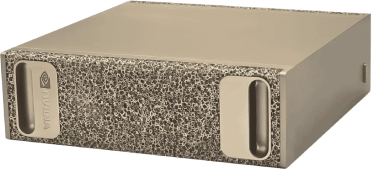
Take enterprise AI anywhere. NVIDIA DGX Spark can power your LLM, Agentic AI, and model prototyping on the go! Harness datacenter power today, available now through Exxact Corporation.
Get a Quote TodayThe setup takes three steps. First, serve the model with DS4, which exposes the Anthropic endpoint on port 8080:
./ds4-server --cuda \
  -m DeepSeek-V4-Flash-IQ2XXS-...-imatrix.gguf \
  --ctx 131072 --host 127.0.0.1 --port 8080 --cors
Second, point Claude Code at it:
export ANTHROPIC_BASE_URL=http://localhost:8080
export ANTHROPIC_AUTH_TOKEN=dummy
export ANTHROPIC_MODEL=deepseek-v4-flash
Third, run Claude Code interactively or headless for an unattended task:
claude -p "fix the failing test" --model deepseek-v4-flash --dangerously-skip-permissions
That is all it takes. No login, API key, or network connection is required. (--dangerously-skip-permissions is for unattended runs in a throwaway repo. More on permissions below.)
To test the setup, we built a small Python todo app with a planted bug: the --due flag is accepted on the command line but never saved. A 13-test suite covers it. With the bug, 2 tests fail.
We gave Claude Code, driven by DeepSeek V4 locally, one instruction: "The --due flag is being ignored — find the bug, fix it, and run the tests to prove it's fixed."
It read the project, found the bug, applied the fix:
if due:
    todo["due"] = due
Then it ran the suite: 13/13 passing. It also reasoned about not breaking a related test, completing the task in under three minutes, entirely local.
A 284B frontier model fixing a real bug on a desktop system is powerful, but it was not the most useful finding.
We ran the same bug-fix task through three coding agents — Claude Code, OpenCode, and Qwen Code — against four local models. Every model was warm-loaded and ran one at a time. We dropped some harnesses because it never decided the task was finished and ran to timeout every time. That may be acceptable for interactive use, but it is not useful for unattended runs. Same task, same 13 tests.
| Harness | DeepSeek-V4 284B | qwen3-coder-80B | qwen3.6-35B | Ornith-1.0-35B |
|---|---|---|---|---|
| OpenCode | 231 s · 13/13 | 20 s · 13/13 | 43 s · 13/13 | 43 s · 13/13 |
| Claude Code | 172 s · 13/13 | 60 s · 13/13 | 43 s · 13/13 | ✗ template error |
| Qwen Code | 181 s · 13/13 | 31 s · 13/13 | 24 s · 13/13 | 43 s · 13/13 |
Once you run agents locally, the main question is not only which model is best. It is how you plan to use it.
On our NVIDIA DGX Spark, Gemma-26B on vLLM reached ~300 tok/s across 10 concurrent agents, while Ollama stayed flat at ~65 tok/s regardless of load. Fan-out also favors smaller models because parallel agents create multiple KV-cache contexts competing for the same 128 GB memory pool.
Choose by topology, not just inference speed benchmarks. A single deep agent and a swarm of sub-agents need different setups.
Two practical details matter when running local coding agents:
You need enough memory to hold the model. The 284B DeepSeek V4 needs the DGX Spark's 128 GB unified memory. An 80B coder like qwen3-coder needs far less. Unified-memory architectures, such as GB10, are useful because the model is not capped by a separate VRAM pool.
There is no per-token or subscription cost. You pay for the hardware once, then run and iterate as much as you need.
For everyday coding speed, use a coding-tuned 80B Qwen3-Coder model with Ollama. For maximum reasoning headroom at a slower token speed, use the 284B DeepSeek V4 model with DS4.
Running Claude Code locally is a practical option for teams that need more control over uptime, data privacy, and long-term inference costs. By pointing Claude Code to an Anthropic-compatible local endpoint, you can run the same agent workflow against a 284B DeepSeek V4 model on a single DGX Spark and complete a real bug-fix task.
Local model capability is no longer the only deciding factor. Once the model is strong enough to complete the task, the agent harness becomes a major part of the outcome: how quickly it works, how reliably it handles tool calls, whether it stops when the job is done, and how well it fits the model endpoint.
For teams evaluating local coding agents, the best setup is the combination of model, inference engine, agent harness, and hardware that matches the workflow. Whether that means an NVIDIA DGX Spark or an Exxact multi-GPU solution depends on the required model size, token speed, concurrency, and precision.
Every benchmark here is reproducible. The engines, bug-fix task, and runner are in thespark-coding-agent-labrepo (https://github.com/510carlos/spark-coding-agent-lab). Clone it and run it on your own Spark.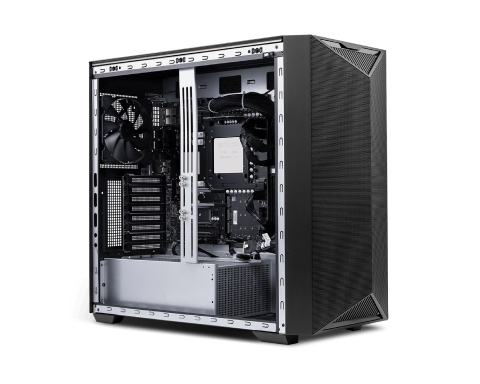
Exxact Valence 4x Max-Q Workstation, NVIDIA DGX Spark, and Exxact Valence built on NVIDIA DGX Station GB300 deliver data‑center‑class AI performance to run bleeding-edge models and agentic AI locally. Your entire AI usage and data in your control.
Get a Quote TodayYou opened your terminal, sent a prompt to Claude Code, and nothing happened. The status page says it is down. Or maybe another refactor just burned through a large share of your usage limit.
Claude Code is a powerful coding agent, but it depends on Anthropic's servers for uptime, privacy boundaries, and pricing. That raises a practical question: can you run the same agent locally without cloud access, logins, or subscriptions?
On a single DGX Spark, we pointed Claude Code at a 284-billion-parameter DeepSeek V4 model running entirely locally. To test it, we gave the agent a bug to fix and compared the result against three other coding agents across two other inference engines.
Claude Code is Anthropic's terminal-based coding agent. It reads your repo, edits files, runs commands, and iterates through a full agent loop. By default, it connects to Anthropic's cloud. There are three main reasons to run it against a local model, that can be worth over the convenience of cloud AI:
Local models also unlock workflows that cloud-hosted assistants may not allow. Some organizations need fully offline or air-gapped. Others want to test open-weight models with custom prompts or domain-specific behavior. The value is not just lower cost but the ability to run an AI system with full operational control.
The tradeoff is that you are using a model you can run locally instead of a frontier cloud model. The point of this article is to measure how much that tradeoff matters on a NVIDIA DGX Spark on a real bug-fix task.
Claude Code uses the Anthropic Messages API (/v1/messages), but it does not care who answers the API, as long as the server speaks the same protocol.
Two local servers can expose an Anthropic-compatible endpoint: DS4 (the engine used here for the frontier model) and Ollama. Point ANTHROPIC_BASE_URL at either your DS4 or Ollama localhost, and Claude Code will use your local model.
export ANTHROPIC_BASE_URL=http://localhost:8080   # your local server
export ANTHROPIC_AUTH_TOKEN=dummy                 # local servers ignore it
There are more engines out there, like https://www.sigllm.com/
DeepSeek V4 Flash is a 284-billion-parameter model. In full precision, that is about 568 GB of weights, which is normally data-center territory. So how does it run on a single NVIDIA DGX Spark?
Selective Q2 GGUF quantization (2-bit for most weights, 8-bit for the critical ones) compresses the model to 86 GB, which fits in the 128 GB of unified memory on an NVIDIA DGX Spark. We served it with DS4, a native CUDA inference engine built for this type of workload.
The measured results on NVIDIA DGX Spark:
Take enterprise AI anywhere. NVIDIA DGX Spark can power your LLM, Agentic AI, and model prototyping on the go! Harness datacenter power today, available now through Exxact Corporation.
Get a Quote TodayThe setup takes three steps. First, serve the model with DS4, which exposes the Anthropic endpoint on port 8080:
./ds4-server --cuda \
  -m DeepSeek-V4-Flash-IQ2XXS-...-imatrix.gguf \
  --ctx 131072 --host 127.0.0.1 --port 8080 --cors
Second, point Claude Code at it:
export ANTHROPIC_BASE_URL=http://localhost:8080
export ANTHROPIC_AUTH_TOKEN=dummy
export ANTHROPIC_MODEL=deepseek-v4-flash
Third, run Claude Code interactively or headless for an unattended task:
claude -p "fix the failing test" --model deepseek-v4-flash --dangerously-skip-permissions
That is all it takes. No login, API key, or network connection is required. (--dangerously-skip-permissions is for unattended runs in a throwaway repo. More on permissions below.)
To test the setup, we built a small Python todo app with a planted bug: the --due flag is accepted on the command line but never saved. A 13-test suite covers it. With the bug, 2 tests fail.
We gave Claude Code, driven by DeepSeek V4 locally, one instruction: "The --due flag is being ignored — find the bug, fix it, and run the tests to prove it's fixed."
It read the project, found the bug, applied the fix:
if due:
    todo["due"] = due
Then it ran the suite: 13/13 passing. It also reasoned about not breaking a related test, completing the task in under three minutes, entirely local.
A 284B frontier model fixing a real bug on a desktop system is powerful, but it was not the most useful finding.
We ran the same bug-fix task through three coding agents — Claude Code, OpenCode, and Qwen Code — against four local models. Every model was warm-loaded and ran one at a time. We dropped some harnesses because it never decided the task was finished and ran to timeout every time. That may be acceptable for interactive use, but it is not useful for unattended runs. Same task, same 13 tests.
| Harness | DeepSeek-V4 284B | qwen3-coder-80B | qwen3.6-35B | Ornith-1.0-35B |
|---|---|---|---|---|
| OpenCode | 231 s · 13/13 | 20 s · 13/13 | 43 s · 13/13 | 43 s · 13/13 |
| Claude Code | 172 s · 13/13 | 60 s · 13/13 | 43 s · 13/13 | ✗ template error |
| Qwen Code | 181 s · 13/13 | 31 s · 13/13 | 24 s · 13/13 | 43 s · 13/13 |
Once you run agents locally, the main question is not only which model is best. It is how you plan to use it.
On our NVIDIA DGX Spark, Gemma-26B on vLLM reached ~300 tok/s across 10 concurrent agents, while Ollama stayed flat at ~65 tok/s regardless of load. Fan-out also favors smaller models because parallel agents create multiple KV-cache contexts competing for the same 128 GB memory pool.
Choose by topology, not just inference speed benchmarks. A single deep agent and a swarm of sub-agents need different setups.
Two practical details matter when running local coding agents:
You need enough memory to hold the model. The 284B DeepSeek V4 needs the DGX Spark's 128 GB unified memory. An 80B coder like qwen3-coder needs far less. Unified-memory architectures, such as GB10, are useful because the model is not capped by a separate VRAM pool.
There is no per-token or subscription cost. You pay for the hardware once, then run and iterate as much as you need.
For everyday coding speed, use a coding-tuned 80B Qwen3-Coder model with Ollama. For maximum reasoning headroom at a slower token speed, use the 284B DeepSeek V4 model with DS4.
Running Claude Code locally is a practical option for teams that need more control over uptime, data privacy, and long-term inference costs. By pointing Claude Code to an Anthropic-compatible local endpoint, you can run the same agent workflow against a 284B DeepSeek V4 model on a single DGX Spark and complete a real bug-fix task.
Local model capability is no longer the only deciding factor. Once the model is strong enough to complete the task, the agent harness becomes a major part of the outcome: how quickly it works, how reliably it handles tool calls, whether it stops when the job is done, and how well it fits the model endpoint.
For teams evaluating local coding agents, the best setup is the combination of model, inference engine, agent harness, and hardware that matches the workflow. Whether that means an NVIDIA DGX Spark or an Exxact multi-GPU solution depends on the required model size, token speed, concurrency, and precision.
Every benchmark here is reproducible. The engines, bug-fix task, and runner are in thespark-coding-agent-labrepo (https://github.com/510carlos/spark-coding-agent-lab). Clone it and run it on your own Spark.Exxact Valence 4x Max-Q Workstation, NVIDIA DGX Spark, and Exxact Valence built on NVIDIA DGX Station GB300 deliver data‑center‑class AI performance to run bleeding-edge models and agentic AI locally. Your entire AI usage and data in your control.
Get a Quote Today