Artificial Intelligence
Comparing Inference Engines on DGX Spark - Ollama, vLLM, DS4
July 2, 2026
9 min read

.jpg?format=webp)
Most will tell you it is impossible to run a 284-billion-parameter model on a single NVIDIA DGX™ Spark. But we got DeepSeek V4 (284B) running on a single DGX Spark, a model many opt for by connecting two DGX Sparks.
But should you? A more honest question to ask is less glamorous: Which inference engine should you use for your LLM?
We spent a couple of weeks answering that, benchmarking Ollama, vLLM, and DwarfStar across quality, speed, concurrency, and memory, on real workloads until we had clear numbers.
We ran these tests to evaluate inference engines for running agents (using Hermes) on the Spark. Our recommendation targets single user with a general-purpose setup use case. We tested three engines, and they sort into three jobs:
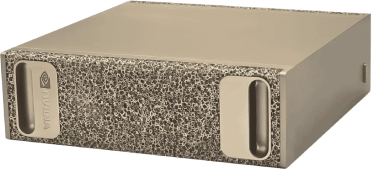
Take enterprise AI anywhere. NVIDIA DGX Spark can power your LLM, Agentic AI, and model prototyping on the go! Harness datacenter power today, available now through Exxact Corporation.
Get a Quote TodayFor a single user, Ollama is the default choice. It installs in minutes, runs virtually any model, and fits the largest ones — including 122B-class flagships that vLLM can't load on this box.
Strengths on DGX Spark | Weaknesses on DGX Spark |
|---|---|
|
|
Tuning note: The NP=4+q8 boost only applies to transformer MoE models. Mamba-based models (e.g., Nemotron) see no concurrency lift on Ollama, and the largest models are pinned to NP=1 by memory.
vLLM is built for concurrency. Single-request speed is modest with 30 tok/s for Gemma-4-26B, but its superpower is batching many requests simultaneously.
Strengths on DGX Spark | Weaknesses on DGX Spark |
|---|---|
|
|
DS4 (DwarfStar, by antirez) is a specialist engine built to run one model: DeepSeek V4 Flash at 284B parameters. It builds from source in under a minute and loads an ~87 GB quantized DeepSeek V4 Flash that fits almost exactly in VRAM (~117 of 119 GB).
Strengths on DGX Spark | Weaknesses on DGX Spark |
|---|---|
|
|
It's not a daily driver, but it does prove the ceiling on this machine is far higher than we thought. We can run a huge model parameter-wise, when accounting for MoE and lower active parameters per query.
A lot of DGX Spark owners suffer from this problem: If you push a model past what fits, it crashes and goes unresponsive (we learned this the hard way). You’d need to hard reset the system by pulling the plug.
The Spark’s unified memory needs headroom for the OS and background services. We used a memory watchdog that intervenes before hitting the memory limit, plus a hard per-container memory cap so the kernel kills the runaway process instead of the machine.
If you're picking a model for agentic AI tool-calling, real context, and decent speed, here's the shortlist from our testing. We feel that 30 tok/s is a good speed for LLM throughput.
First, the size lens on the Spark, model size trades brain for speed and headroom. An MoE model best fits the NVIDIA DGX Spark's hardware architecture.
Good picks:
Skip, or handle with care:
The pattern: an MoE with working tools and real context — which points at Qwen3.5-122B or Gemma-4-26B on Ollama for most people. Note that speed is active-parameter dependent: a 70B dense drops to ~6 tok/s, a 120B-class MoE runs ~20–26.
| With Gemma-4 26B | Ollama | vLLM | DS4 |
|---|---|---|---|
| Best for | one user, general purpose | many concurrent requests | one frontier model |
| Largest model it fits here | ~120–122B | ~80B (120B with small shards) | 284B (only engine that can) |
| Single-stream speed | ~64 tok/s | ~30 tok/s | ~15 tok/s (its 284B) |
| Concurrency (aggregate @ ~10) | ~122 tok/s (tuned) | 300+ tok/s | none (serializes) |
| Tool-calling | ✅ | ✅ | ✅ |
| Flexibility | runs anything | runs anything | one model only |
| Setup | trivial | moderate (Spark-specific flags) | build from source |
Comfortably up to 120–122B parameters on Ollama, and even a 284B model (DeepSeek V4 Flash, via the DS4 engine). The real limits are unified memory and how the model's weights are sharded, not raw capability.
It depends on the model's active parameters, because the box is memory-bandwidth-bound: a 26B MoE runs ~30–64 tok/s, a 120B-class MoE ~15–26, a 70B dense model ~6. Fewer active params per token = faster.
To keep our DGX Spark from crashing, we leave headroom for OS memory and run a watchdog to kill applications if they hit a memory threshold. If not, a memory overload crashed the DGX Spark requiring us to pull the plug.
The DGX Spark is bandwidth-bound. A Mixture-of-Experts model that activates only a few billion parameters per token (e.g., Gemma-4-26B-A4B) outruns a dense 70B that activates all of them. Total size matters less than active parameter size.
After all of it, the decision is refreshingly simple:
And the lesson under all three, the one thing to take away about this machine: on the DGX Spark, memory decides everything; how an engine manages it, and how few parameters a model activates per token. If you are interested in purchasing an NVIDIA DGX Spark (or Sparks), talk to an Exxact sales engineer today! Exxact is an NVIDIA Solution Partner and offer multi-Spark configurations with switches and cables to best fit your deployment style. Contact us today!
Take enterprise AI anywhere. NVIDIA DGX Spark can power your LLM, Agentic AI, and model prototyping on the go! Harness datacenter power today, available now through Exxact Corporation.
Get a Quote TodayMost will tell you it is impossible to run a 284-billion-parameter model on a single NVIDIA DGX™ Spark. But we got DeepSeek V4 (284B) running on a single DGX Spark, a model many opt for by connecting two DGX Sparks.
But should you? A more honest question to ask is less glamorous: Which inference engine should you use for your LLM?
We spent a couple of weeks answering that, benchmarking Ollama, vLLM, and DwarfStar across quality, speed, concurrency, and memory, on real workloads until we had clear numbers.
We ran these tests to evaluate inference engines for running agents (using Hermes) on the Spark. Our recommendation targets single user with a general-purpose setup use case. We tested three engines, and they sort into three jobs:
Take enterprise AI anywhere. NVIDIA DGX Spark can power your LLM, Agentic AI, and model prototyping on the go! Harness datacenter power today, available now through Exxact Corporation.
Get a Quote TodayFor a single user, Ollama is the default choice. It installs in minutes, runs virtually any model, and fits the largest ones — including 122B-class flagships that vLLM can't load on this box.
Strengths on DGX Spark | Weaknesses on DGX Spark |
|---|---|
|
|
Tuning note: The NP=4+q8 boost only applies to transformer MoE models. Mamba-based models (e.g., Nemotron) see no concurrency lift on Ollama, and the largest models are pinned to NP=1 by memory.
vLLM is built for concurrency. Single-request speed is modest with 30 tok/s for Gemma-4-26B, but its superpower is batching many requests simultaneously.
Strengths on DGX Spark | Weaknesses on DGX Spark |
|---|---|
|
|
DS4 (DwarfStar, by antirez) is a specialist engine built to run one model: DeepSeek V4 Flash at 284B parameters. It builds from source in under a minute and loads an ~87 GB quantized DeepSeek V4 Flash that fits almost exactly in VRAM (~117 of 119 GB).
Strengths on DGX Spark | Weaknesses on DGX Spark |
|---|---|
|
|
It's not a daily driver, but it does prove the ceiling on this machine is far higher than we thought. We can run a huge model parameter-wise, when accounting for MoE and lower active parameters per query.
A lot of DGX Spark owners suffer from this problem: If you push a model past what fits, it crashes and goes unresponsive (we learned this the hard way). You’d need to hard reset the system by pulling the plug.
The Spark’s unified memory needs headroom for the OS and background services. We used a memory watchdog that intervenes before hitting the memory limit, plus a hard per-container memory cap so the kernel kills the runaway process instead of the machine.
If you're picking a model for agentic AI tool-calling, real context, and decent speed, here's the shortlist from our testing. We feel that 30 tok/s is a good speed for LLM throughput.
First, the size lens on the Spark, model size trades brain for speed and headroom. An MoE model best fits the NVIDIA DGX Spark's hardware architecture.
Good picks:
Skip, or handle with care:
The pattern: an MoE with working tools and real context — which points at Qwen3.5-122B or Gemma-4-26B on Ollama for most people. Note that speed is active-parameter dependent: a 70B dense drops to ~6 tok/s, a 120B-class MoE runs ~20–26.
| With Gemma-4 26B | Ollama | vLLM | DS4 |
|---|---|---|---|
| Best for | one user, general purpose | many concurrent requests | one frontier model |
| Largest model it fits here | ~120–122B | ~80B (120B with small shards) | 284B (only engine that can) |
| Single-stream speed | ~64 tok/s | ~30 tok/s | ~15 tok/s (its 284B) |
| Concurrency (aggregate @ ~10) | ~122 tok/s (tuned) | 300+ tok/s | none (serializes) |
| Tool-calling | ✅ | ✅ | ✅ |
| Flexibility | runs anything | runs anything | one model only |
| Setup | trivial | moderate (Spark-specific flags) | build from source |
Comfortably up to 120–122B parameters on Ollama, and even a 284B model (DeepSeek V4 Flash, via the DS4 engine). The real limits are unified memory and how the model's weights are sharded, not raw capability.
It depends on the model's active parameters, because the box is memory-bandwidth-bound: a 26B MoE runs ~30–64 tok/s, a 120B-class MoE ~15–26, a 70B dense model ~6. Fewer active params per token = faster.
To keep our DGX Spark from crashing, we leave headroom for OS memory and run a watchdog to kill applications if they hit a memory threshold. If not, a memory overload crashed the DGX Spark requiring us to pull the plug.
The DGX Spark is bandwidth-bound. A Mixture-of-Experts model that activates only a few billion parameters per token (e.g., Gemma-4-26B-A4B) outruns a dense 70B that activates all of them. Total size matters less than active parameter size.
After all of it, the decision is refreshingly simple:
And the lesson under all three, the one thing to take away about this machine: on the DGX Spark, memory decides everything; how an engine manages it, and how few parameters a model activates per token. If you are interested in purchasing an NVIDIA DGX Spark (or Sparks), talk to an Exxact sales engineer today! Exxact is an NVIDIA Solution Partner and offer multi-Spark configurations with switches and cables to best fit your deployment style. Contact us today!
Take enterprise AI anywhere. NVIDIA DGX Spark can power your LLM, Agentic AI, and model prototyping on the go! Harness datacenter power today, available now through Exxact Corporation.
Get a Quote Today