New NVIDIA GPU Release
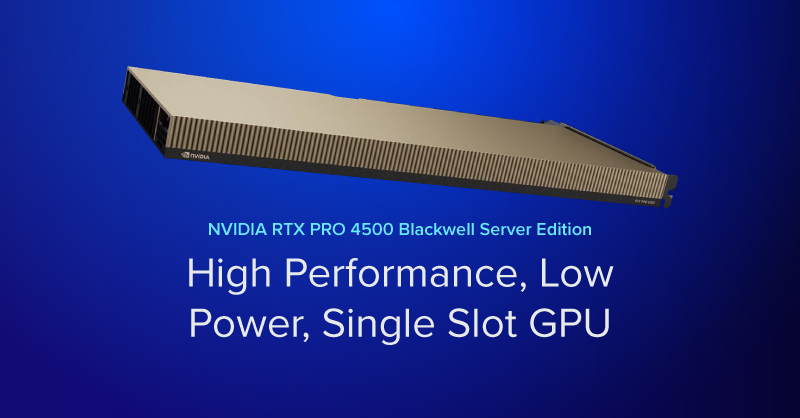
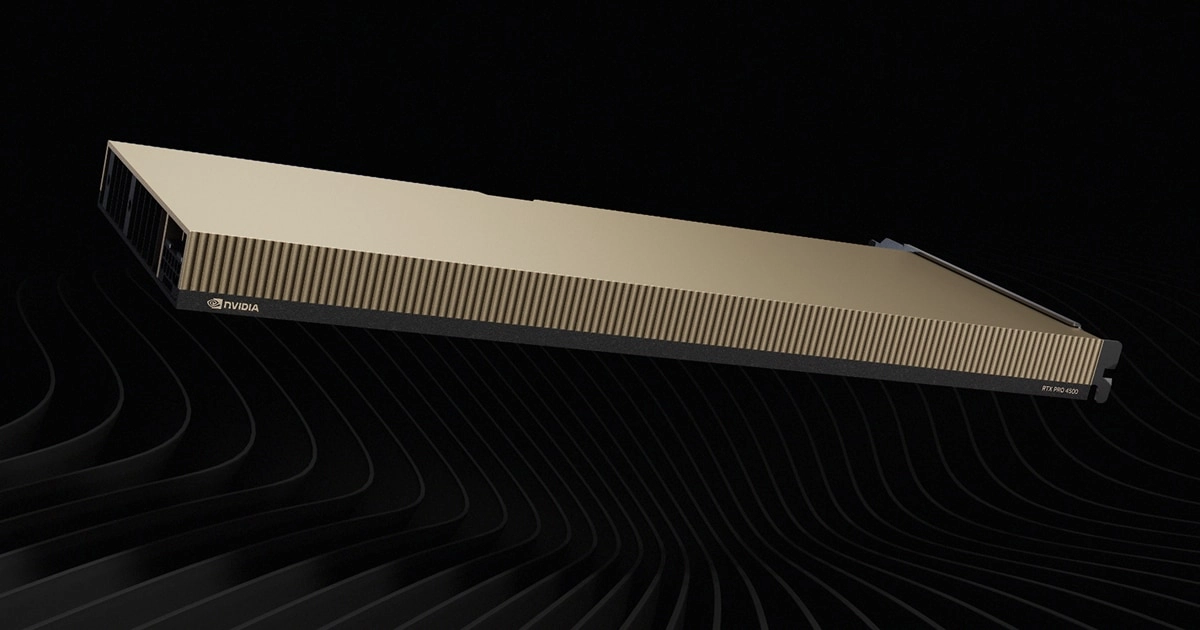
One of the GTC 2026 announcements from NVIDIA is a new PCIe GPU. The NVIDIA RTX PRO™ 4500 Blackwell Server Edition GPU is a single slot passive GPU featuring 32GB of GDDR7 ECC memory.
As the successor to the NVIDIA L4, the RTX PRO 4500 Blackwell Server Edition is built to accelerate AI inference, data science, and visual computing. With a power-efficient, 165 W single-slot form factor, the GPU provides flexible capabilities and powerful acceleration for data center, edge, and cloud deployments.
We will go over the specifications and compare them to the prior-generation NVIDIA L4 differences.
NVIDIA RTX PRO 4500 Blackwell Server Edition Specs
| Specification | NVIDIA RTX PRO 4500 Blackwell Server Edition | NVIDIA L4 Tensor Core GPU |
| Architecture | Blackwell | Ada Lovelace |
| CUDA Cores | 10,496 | 7,424 |
| GPU Memory | 32GB GDDR7 ECC | 24GB GDDR6 ECC |
| Memory Bandwidth | 896GB/s | 300GB/s |
| Multi-Instance GPU | 2 MIGS (16GB) | — |
| FP32 | 51 TFLOPS | 30 TFLOPS |
| FP16 Tensor Core | 406 TFLOPS | 242 TFLOPS |
| FP8 Tensor Core | 811 TFLOPS | 485 TFLOPS |
| FP4 Tensor Core | 1.6 PFLOPS | — |
| Form Factor | Single-Slot FHFL Passive | Single-Slot FHFL Passive |
| Interconnect | PCIe 5.0 x16 | PCIe 4.0 x16 |
| TDP | 165W | 72W |
Source: NVIDIA
- Architecture & Raw Power: The RTX PRO 4500 Blackwell Server Edition is built on the newer Blackwell architecture vs the L4's Ada Lovelace. Blackwell is NVIDIA's latest generation, bringing significant efficiency and performance improvements. The RTX PRO 4500 Blackwell also has ~41% more CUDA cores (10,496 vs 7,424), meaning it can handle more parallel workloads simultaneously.
- Memory — A Big Difference: The RTX PRO 4500 Blackwell has 32GB of faster GDDR7 memory running at nearly 3x the bandwidth (800GB/s vs 300GB/s). In practice, higher bandwidth means the GPU can feed data to its cores much faster, which matters enormously for large AI models, high-resolution rendering, and big datasets. By comparison, the L4 has 24GB of GDDR6 memory.
- AI/ML Performance: This is where the gap is most dramatic. The RTX PRO 4500 Blackwell is roughly 13–17x faster than the L4 in FP32, and about 1.7x faster in tensor core operations (FP16/FP8). This makes the RTX PRO 4500 Blackwell far better suited for training and inferencing large AI models, while the L4 is more of an inference-focused card for lighter workloads.
- Multi-Instance GPU (MIG): The RTX PRO 4500 Blackwell Server Edition supports splitting into 2 independent 16GB virtual GPUs, which is useful in server environments where you want to run multiple isolated workloads on one card. The prior generation L4 lacks MIG support.
- Power & Connectivity: The RTX PRO 4500 Blackwell Server Edition runs at 165W, which is double what the L4 runs at. It connects over PCIe 5.0 x16, which offers roughly double the bandwidth of PCIe 4.0. Compared to that, the L4 is the lower-power option at 72W on PCIe 4.0, which can limit throughput in bandwidth-sensitive workloads.
The RTX PRO 4500 Blackwell is a considerably more powerful PCIe GPU in a compact form factor, aimed at demanding AI inference, video processing, rendering, data processing, and other accelerated compute workloads. The L4 remains a cost-effective option for a lower power budget.
Who is the NVIDIA RTX PRO 4500 Blackwell Server Edition For?
The RTX PRO 4500 Blackwell Server Edition is built for teams that need more throughput per server slot for GPU-accelerated workloads, without stepping up to multi-slot, high-power data center GPUs.
AI inference at scale
- High memory bandwidth and strong Tensor Core performance make it a great fit for LLM and vision inference, where latency and tokens-per-second matter.
- Useful for multi-tenant inference environments that need isolation, including serving multiple models or customers on the same host.
- Ideal for edge and data center inference nodes that want a single-slot, power-efficient accelerator.
Life sciences and research computing
- Strong FP32 and fast memory bandwidth help with small- to mid-scale simulations and compute-heavy pipelines.
- A good option for running many parallel jobs on shared infrastructure, such as parameter sweeps, Monte Carlo workloads, and batch analytics.
- Fits well in lab clusters where density and manageable power draw are important.
Rendering and visual computing
- Designed for GPU rendering, visualization, and VDI workloads in rackmount systems.
- Well-suited for teams building render nodes that need density, predictable thermals, and consistent performance.
Data science and analytics
- Helpful for workflows that are memory-bandwidth bound, including feature engineering, accelerated ETL, and GPU-accelerated libraries.
- Useful for multi-user environments where many smaller jobs run continuously throughout the day.
Media processing and video workloads
- A strong candidate for transcoding and video analytics pipelines that benefit from GPU acceleration, especially when deployed across many servers.
If your workloads are primarily constrained by power, space, and density, the RTX PRO 4500 Blackwell Server Edition offers an attractive balance of compute, bandwidth, and deployability in a single-slot server form factor.
FAQ for NVIDIA RTX PRO 4500 Blackwell Server Edition
Does the RTX PRO 4500 Blackwell Server Edition have display outputs?
No, the NVIDIA RTX PRO 4500 Blackwell Server Edition does not have any display outputs. This is a passive, server-focused GPU designed for headless deployments.
What kinds of workloads is RTX PRO 4500 Blackwell Server Edition best suited for?
AI inference, data science, and visual computing workloads that benefit from high memory bandwidth and strong Tensor Core performance.
How does RTX PRO 4500 Blackwell Server Edition compare to the NVIDIA L4?
NVIDIA RTX PRO 4500 Blackwell Server Edition replaces the NVIDIA L4, offering newer Blackwell architecture, more CUDA cores, higher memory bandwidth, and higher FP32 and Tensor throughput, at a higher power draw. It also features MIG for isolated workloads on a single GPU.
What systems is RTX PRO 4500 Blackwell Server Edition intended to go into?
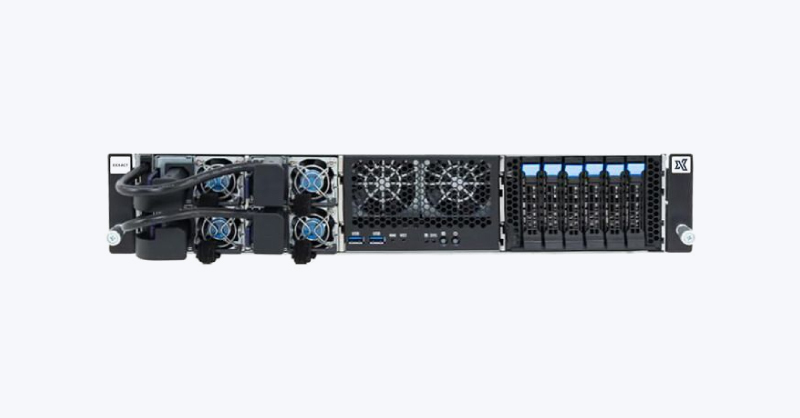
Standard PCIe server platforms for servers that prioritize low power requirements and support passive FHFL GPUs. This includes Exxact TensorEX 2U servers in the data centers and/or the edge for AI inference and rendering workloads.
Conclusion
The NVIDIA RTX PRO 4500 Blackwell Server Edition raises the bar for what a single-slot, passively cooled PCIe GPU can deliver in modern servers. With Blackwell architecture, 32GB of GDDR7 ECC, and substantially higher memory bandwidth than the NVIDIA L4, it is positioned for higher-throughput AI inference, data science, and visualization workloads in dense edge and data center deployments.
For teams that want more performance per slot and the flexibility to split resources with MIG, the NVIDIA RTX PRO 4500 is a compelling upgrade path when performance and bandwidth matter most. It is the strongest single-slot PCIe GPU currently. Contact Exxact for availability in your next GPU server.
.png)
Fueling Innovation with an Exxact Multi-GPU Server
Training AI models on massive datasets can be accelerated exponentially with the right system. It's not just a high-performance computer, but a tool to propel and accelerate your research.
Configure Now
NVIDIA RTX PRO 4500 Blackwell Server Edition - High Performance, Low Power, Single Slot GPU
New NVIDIA GPU Release
One of the GTC 2026 announcements from NVIDIA is a new PCIe GPU. The NVIDIA RTX PRO™ 4500 Blackwell Server Edition GPU is a single slot passive GPU featuring 32GB of GDDR7 ECC memory.
As the successor to the NVIDIA L4, the RTX PRO 4500 Blackwell Server Edition is built to accelerate AI inference, data science, and visual computing. With a power-efficient, 165 W single-slot form factor, the GPU provides flexible capabilities and powerful acceleration for data center, edge, and cloud deployments.
We will go over the specifications and compare them to the prior-generation NVIDIA L4 differences.
NVIDIA RTX PRO 4500 Blackwell Server Edition Specs
| Specification | NVIDIA RTX PRO 4500 Blackwell Server Edition | NVIDIA L4 Tensor Core GPU |
| Architecture | Blackwell | Ada Lovelace |
| CUDA Cores | 10,496 | 7,424 |
| GPU Memory | 32GB GDDR7 ECC | 24GB GDDR6 ECC |
| Memory Bandwidth | 896GB/s | 300GB/s |
| Multi-Instance GPU | 2 MIGS (16GB) | — |
| FP32 | 51 TFLOPS | 30 TFLOPS |
| FP16 Tensor Core | 406 TFLOPS | 242 TFLOPS |
| FP8 Tensor Core | 811 TFLOPS | 485 TFLOPS |
| FP4 Tensor Core | 1.6 PFLOPS | — |
| Form Factor | Single-Slot FHFL Passive | Single-Slot FHFL Passive |
| Interconnect | PCIe 5.0 x16 | PCIe 4.0 x16 |
| TDP | 165W | 72W |

Source: NVIDIA
- Architecture & Raw Power: The RTX PRO 4500 Blackwell Server Edition is built on the newer Blackwell architecture vs the L4's Ada Lovelace. Blackwell is NVIDIA's latest generation, bringing significant efficiency and performance improvements. The RTX PRO 4500 Blackwell also has ~41% more CUDA cores (10,496 vs 7,424), meaning it can handle more parallel workloads simultaneously.
- Memory — A Big Difference: The RTX PRO 4500 Blackwell has 32GB of faster GDDR7 memory running at nearly 3x the bandwidth (800GB/s vs 300GB/s). In practice, higher bandwidth means the GPU can feed data to its cores much faster, which matters enormously for large AI models, high-resolution rendering, and big datasets. By comparison, the L4 has 24GB of GDDR6 memory.
- AI/ML Performance: This is where the gap is most dramatic. The RTX PRO 4500 Blackwell is roughly 13–17x faster than the L4 in FP32, and about 1.7x faster in tensor core operations (FP16/FP8). This makes the RTX PRO 4500 Blackwell far better suited for training and inferencing large AI models, while the L4 is more of an inference-focused card for lighter workloads.
- Multi-Instance GPU (MIG): The RTX PRO 4500 Blackwell Server Edition supports splitting into 2 independent 16GB virtual GPUs, which is useful in server environments where you want to run multiple isolated workloads on one card. The prior generation L4 lacks MIG support.
- Power & Connectivity: The RTX PRO 4500 Blackwell Server Edition runs at 165W, which is double what the L4 runs at. It connects over PCIe 5.0 x16, which offers roughly double the bandwidth of PCIe 4.0. Compared to that, the L4 is the lower-power option at 72W on PCIe 4.0, which can limit throughput in bandwidth-sensitive workloads.
The RTX PRO 4500 Blackwell is a considerably more powerful PCIe GPU in a compact form factor, aimed at demanding AI inference, video processing, rendering, data processing, and other accelerated compute workloads. The L4 remains a cost-effective option for a lower power budget.
Who is the NVIDIA RTX PRO 4500 Blackwell Server Edition For?
The RTX PRO 4500 Blackwell Server Edition is built for teams that need more throughput per server slot for GPU-accelerated workloads, without stepping up to multi-slot, high-power data center GPUs.
AI inference at scale
- High memory bandwidth and strong Tensor Core performance make it a great fit for LLM and vision inference, where latency and tokens-per-second matter.
- Useful for multi-tenant inference environments that need isolation, including serving multiple models or customers on the same host.
- Ideal for edge and data center inference nodes that want a single-slot, power-efficient accelerator.
Life sciences and research computing
- Strong FP32 and fast memory bandwidth help with small- to mid-scale simulations and compute-heavy pipelines.
- A good option for running many parallel jobs on shared infrastructure, such as parameter sweeps, Monte Carlo workloads, and batch analytics.
- Fits well in lab clusters where density and manageable power draw are important.
Rendering and visual computing
- Designed for GPU rendering, visualization, and VDI workloads in rackmount systems.
- Well-suited for teams building render nodes that need density, predictable thermals, and consistent performance.
Data science and analytics
- Helpful for workflows that are memory-bandwidth bound, including feature engineering, accelerated ETL, and GPU-accelerated libraries.
- Useful for multi-user environments where many smaller jobs run continuously throughout the day.
Media processing and video workloads
- A strong candidate for transcoding and video analytics pipelines that benefit from GPU acceleration, especially when deployed across many servers.
If your workloads are primarily constrained by power, space, and density, the RTX PRO 4500 Blackwell Server Edition offers an attractive balance of compute, bandwidth, and deployability in a single-slot server form factor.

FAQ for NVIDIA RTX PRO 4500 Blackwell Server Edition
Does the RTX PRO 4500 Blackwell Server Edition have display outputs?
No, the NVIDIA RTX PRO 4500 Blackwell Server Edition does not have any display outputs. This is a passive, server-focused GPU designed for headless deployments.
What kinds of workloads is RTX PRO 4500 Blackwell Server Edition best suited for?
AI inference, data science, and visual computing workloads that benefit from high memory bandwidth and strong Tensor Core performance.
How does RTX PRO 4500 Blackwell Server Edition compare to the NVIDIA L4?
NVIDIA RTX PRO 4500 Blackwell Server Edition replaces the NVIDIA L4, offering newer Blackwell architecture, more CUDA cores, higher memory bandwidth, and higher FP32 and Tensor throughput, at a higher power draw. It also features MIG for isolated workloads on a single GPU.
What systems is RTX PRO 4500 Blackwell Server Edition intended to go into?
Standard PCIe server platforms for servers that prioritize low power requirements and support passive FHFL GPUs. This includes Exxact TensorEX 2U servers in the data centers and/or the edge for AI inference and rendering workloads.
Conclusion
The NVIDIA RTX PRO 4500 Blackwell Server Edition raises the bar for what a single-slot, passively cooled PCIe GPU can deliver in modern servers. With Blackwell architecture, 32GB of GDDR7 ECC, and substantially higher memory bandwidth than the NVIDIA L4, it is positioned for higher-throughput AI inference, data science, and visualization workloads in dense edge and data center deployments.
For teams that want more performance per slot and the flexibility to split resources with MIG, the NVIDIA RTX PRO 4500 is a compelling upgrade path when performance and bandwidth matter most. It is the strongest single-slot PCIe GPU currently. Contact Exxact for availability in your next GPU server.
.png)
Fueling Innovation with an Exxact Multi-GPU Server
Training AI models on massive datasets can be accelerated exponentially with the right system. It's not just a high-performance computer, but a tool to propel and accelerate your research.
Configure Now